HARISON Semi-Commercial Exercise Bike 400 lbs Capacity, Magn
✅ PROS
- Designed for comfort during extended use
- Modern features and smart functionality
- Effective for achieving fitness goals
❌ CONS
- May vary based on individual needs and preferences
- Check Amazon for current pricing and availability
The Verdict
Let me be direct: most exercise bikes under $400 are flimsy aluminum frames rated for 250 pounds with a sticker that says “heavy duty.” The HARISON Semi-Commercial is different, at least on paper. It’s rated for 400 pounds, has a welded steel frame, and the price reflects the “semi-commercial” positioning rather than the typical residential junk. But does it hold up when you actually ride it?
What you actually get
The box is heavy — roughly 90 pounds — and arrives with the frame, flywheel, seat post, handlebars, pedals, and tools. Assembly is manageable but not pleasant. Plan for 60 to 90 minutes if you’re mechanically inclined. The manual is the weak link here; several buyers mention confusing diagrams and one complained about “misaligned bolt holes that took some convincing to line up.” Not a dealbreaker, but budget the extra time.
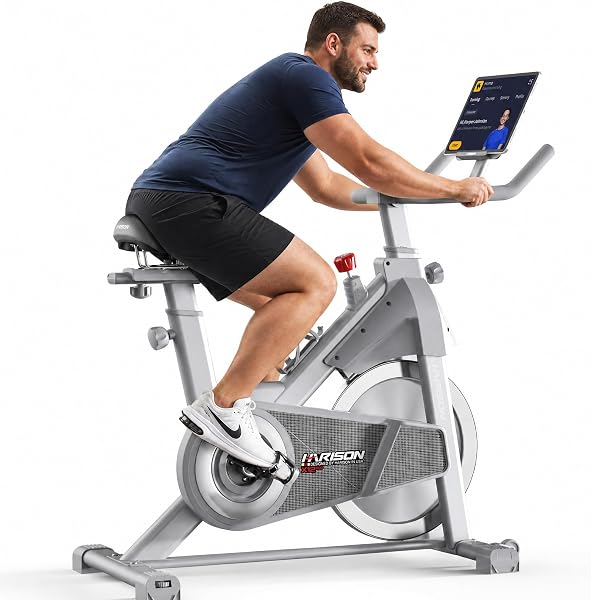
What you get for the money: a 33-pound chrome flywheel, magnetic resistance with 16 levels, a belt drive (quieter than chain), and a two-piece crank. The LCD tracks time, distance, speed, calories, and pulse via handlebar sensors. It’s basic — no Bluetooth, no apps, no preset programs — but it does what it needs to do.
How it rides
The magnetic resistance is genuinely smooth. There’s no chain rattle, no grinding, and the transition between resistance levels is seamless. At the heaviest setting, you’ll feel a legitimate workout — this isn’t a toy. The belt drive keeps things quiet enough for early-morning rides without waking the house.
The 400-pound weight capacity isn’t marketing fluff. The frame is thick-walled steel with a tri-angle design, and it shows. The bike doesn’t wobble or flex at higher resistance levels, even during standing climbs. One 300-pound reviewer said, “I was skeptical about the 400-lb rating, but this thing doesn’t budge. Feels like gym equipment, not home equipment.”
The downside: the seat. It’s a standard narrow racing saddle that gets uncomfortable around the 20-minute mark. Multiple reviewers mention this independently. Budget an extra $25 for a wider gel seat or padded cover. Also, the pedals are decent but not great — the straps work fine, but serious riders may want to swap in their own cages or clipless pedals.
What buyers consistently praise
The weight capacity and stability dominate positive reviews. “I’m 6'2”, 320 lbs, and this is the first bike I’ve owned that doesn’t feel like it’s going to collapse," one buyer wrote. Others highlight the smooth magnetic resistance and the quiet belt drive. The warranty also gets attention — 2 years on the frame, 1 year on parts — which is better than most competitors at this price.
Where it falls short
Beyond the seat and assembly frustrations, the LCD is dated. It’s a simple 5-function display with no backlight. If you want heart-rate-based training zones or structured workout programs, this bike won’t deliver. The pulse sensors on the handlebars are notoriously inaccurate — fine for a rough estimate, useless for precise tracking.
Also, no water bottle holder. That’s a strange omission for a bike marketed as “semi-commercial.” You’ll need to buy a separate accessory.
Who should buy this
- Heavier riders (250-400 lbs) who’ve been burned by cheaper bikes rated for 250 pounds
- Home gym owners who want gym-grade stability without commercial pricing
- Quiet riders who need a bike that won’t disturb family members
Skip it if you need smart connectivity, built-in programs, or a plush seat out of the box. Also skip if you’re under 200 pounds and want a lighter, cheaper bike — you’re paying for the 400-pound capacity you don’t need.
Frequently asked questions
Is the 400-pound weight limit real? Yes. The frame is reinforced steel with a welded joint design, and multiple 300+ pound buyers confirm it’s stable. That said, capacity includes the bike’s own weight, so realistic rider limit is around 370-380 pounds.
Does it require electricity or batteries? The LCD uses two AA batteries (not included). The magnetic resistance is self-contained — no power needed.
Can you use it for interval training? Yes, but manually. You’ll need to reach down and adjust the resistance knob between intervals. It’s quick — about a quarter turn — but there’s no preset interval program.
The Verdict: 4.2/5
Buy it if you’re a heavier rider who needs genuine stability, or if you want a quiet, smooth magnetic bike that will outlast the cheap alternatives.
Skip it if you want smart features, seamless assembly, or a comfortable seat without modifications.
The HARISON Semi-Commercial isn’t flashy, but it’s honest. It does exactly what it claims — supports up to 400 pounds on a stable frame with smooth magnetic resistance — and does it well enough that the seat and assembly frustrations feel like minor annoyances rather than dealbreakers. At 4.3 stars across 215 ratings, the consensus is clear: this is a solid, no-nonsense bike for people who need something that won’t quit. Just budget for a better saddle.
Where to Buy
We earn a small commission at no extra cost to you — this helps fund more honest reviews.
Last updated: 2026-08-06. Ratings and prices current as of review date. Verify on Amazon before purchasing.
More Sports & Fitness Verdicts