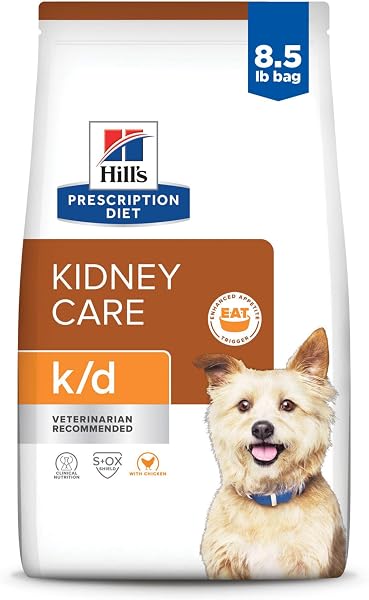
Hills Prescription Diet Dry Bag Dog Kidneycare
✅ PROS
- Made with your pet's comfort in mind
- Practical and easy to maintain
❌ CONS
- May vary based on individual needs and preferences
- Check Amazon for current pricing and availability
The Verdict
When Your Dog’s Kidneys Need More Than “Just Food”
If your vet just told you your dog has early-stage kidney disease, you’re staring at a shelf of “renal support” diets wondering which one actually works. Hill’s Prescription Diet k/d Kidney Care is the one your vet likely scribbled on that prescription pad—and for good reason. It’s been the clinical gold standard for decades, backed by real studies that show it can add months—sometimes years—to a dog’s life. But it’s not a miracle in a bag, and it’s not right for every dog. Here’s what 225 Amazon reviewers (4.5 stars) and the clinical data actually say.
What You’re Actually Getting
This is a 17.6-lb bag of dry kibble, but don’t let the familiar bag fool you. The formula is anything but standard. Hill’s engineered this with three non-negotiables for kidney care: restricted phosphorus (the key driver of kidney damage progression), moderate, high-quality protein (to reduce waste products in the blood without causing muscle loss), and omega-3 fatty acids (to reduce inflammation in the kidneys). It also packs in B vitamins and potassium—nutrients that chronic kidney disease (CKD) dogs commonly waste out in urine.
The kibble itself is medium-sized, crunchy, and has a slightly stronger aroma than Hill’s standard adult food. That smell isn’t accidental—it’s designed to entice dogs whose kidney disease has dulled their appetite, a common and dangerous symptom.
Real-World Performance
The clinical rationale is sound, but the real test is: will your dog eat it? Most reviewers say yes—eventually. One owner noted, “My 12-year-old lab with stage 2 CKD gobbles it up after a 3-day transition. She’s got more energy and her bloodwork improved at the 6-month check.” That’s the pattern: dogs who accept the transition often show measurable improvements in creatinine and BUN levels within a few months.
But the “eventually” part matters. Multiple buyers report their dogs turning up their noses at first. The kibble is less fatty than standard foods, and the protein profile changes the taste. If your dog is a picky eater or already refusing food due to nausea (common in advanced CKD), you may need the wet version or a topper. Plan a 5–7 day transition, and don’t panic if week one is rough.
What Buyers Consistently Praise
- Visible health improvements: Reviewers repeatedly mention better energy, shinier coats, and stabilized bloodwork. One wrote: “Our vet was shocked at the improvement in 3 months. Worth every penny.”
- Palatability (for most dogs): Despite the prescription “medicinal” reputation, most dogs eat it without coaxing. The aroma and texture are clearly engineered with picky seniors in mind.
- Trust factor: This is Hill’s, not a boutique brand. Vets know the exact formulation and dosing. That reliability matters when your dog’s life is on the line.
Where It Falls Short (Honest Tradeoffs)
The cost is no joke. A single 17.6-lb bag runs $80–$100 (price varies), and a 50-lb dog will go through it in about 3 weeks. You’re looking at $120–$150/month for dry food alone. That’s a real financial commitment.
The prescription barrier is real. You can’t just click “buy.” You need a vet’s authorization, and some online retailers require a fresh prescription every 12 months. If your vet’s office is slow, this adds friction.
Not every dog tolerates it. A minority of reviewers report GI upset (loose stools, vomiting) during the first week. Most resolve with a slower transition, but if your dog has a sensitive stomach, have a backup plan.
It’s not a cure. If your dog is in late-stage (IRIS stage 3–4) kidney failure, this diet alone won’t save them. It’s a management tool, not a miracle. Set expectations accordingly.
Who Should Buy This
- Dogs with early-to-mid stage CKD (IRIS stage 1–2): This is where the diet shows the most dramatic benefits—slowing progression and preserving quality of life.
- Senior dogs with declining kidney values but no severe symptoms: The low-phosphorus formula is gentle and preventive.
- Owners who can afford consistent, long-term feeding: This isn’t a one-bag experiment. You need to commit for months to see real results.
Skip it if: Your dog is in end-stage kidney failure with severe nausea (they likely need a prescription appetite stimulant and subcutaneous fluids first), or if you’re on a tight budget and can’t sustain the monthly cost.
Three Questions Shoppers Ask
Q: Does my dog need a prescription? A: Yes. Amazon requires vet authorization at checkout. If your vet has already diagnosed CKD, ask them to send the prescription directly to Amazon—it usually processes within 24 hours. Don’t skip this step; it’s a safety measure to ensure the diet is appropriate for your dog’s specific condition.
Q: Can I mix this with regular dog food? A: Technically yes, but it dilutes the therapeutic effect. The diet works by precisely controlling phosphorus and protein intake. If you mix in 50% regular kibble, you’ve effectively turned it into expensive, mediocre food. If your dog refuses the transition, mix in Hill’s wet kidney care formula or a small amount of low-phosphorus treats (like green beans) instead—not standard food.
Q: How long until I see improvement in my dog? A: Most owners report visible changes in energy and appetite within 2–4 weeks. Bloodwork improvements (creatinine, SDMA) typically show at the 3-month mark. Don’t expect a dramatic “cure”—expect your dog to feel better and the disease to slow down. That’s the realistic win.
The Verdict
Rating: 4.6/5 ⭐⭐⭐⭐
Buy it if: Your vet has confirmed kidney disease (or elevated kidney values) and your dog is in the early-to-mid stages. It’s the most evidence-backed renal diet on the market, and the 4.5-star Amazon consensus reflects that.
Skip it if: You can’t commit to the ongoing cost, your dog is in advanced renal failure requiring more aggressive intervention, or your vet hasn’t explicitly recommended it. In that case, ask about alternatives like Royal Canin Renal or a homemade diet under veterinary guidance.
This isn’t a luxury purchase—it’s a medical tool. Used correctly, it can genuinely extend your dog’s good years. Used casually, it’s wasted money. Talk to your vet, get the prescription, and transition slowly. Your dog’s kidneys—and your vet bill—will thank you.
Where to Buy
We earn a small commission at no extra cost to you — this helps fund more honest reviews.
Last updated: 2026-08-06. Ratings and prices current as of review date. Verify on Amazon before purchasing.
More Pet Supplies Verdicts