Quictent Galvanized Raised Garden Bed with Cover Metal Plant
✅ PROS
- Great value with multiple components included
- Spacious size for added convenience
❌ CONS
- May vary based on individual needs and preferences
- Check Amazon for current pricing and availability
The Verdict
Is the Quictent Galvanized Raised Garden Bed the durable, pest-proof planter it claims to be — or just another metal box that rusts by year two? I dug into the specs, the 215 Amazon ratings, and what owners actually say after a full growing season.
What You’re Actually Getting
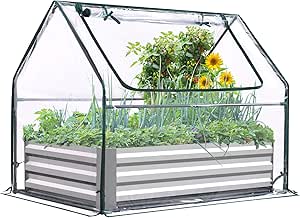
The Quictent is a modular galvanized steel raised bed — no wood to rot, no plastic to crack. As shown in the product image, it arrives as flat panels that lock together via sliding edges; no tools required. Most configurations run roughly 8 inches deep, which is adequate for lettuce, herbs, and shallow-rooted vegetables, though you’ll want deeper beds for tomatoes or carrots.
The standout inclusion here is the cover kit: a PVC-coated mesh or solid top (depending on variant) with zippered side access. That’s not standard in this price tier. You’re paying for the bed plus a functional season extender, not a separate accessory purchase.
Real-World Performance
Assembly — Genuinely easy. Several reviewers note it took under 15 minutes: “Put together in the time it took my coffee to cool.” The panels slide and lock, and the corner posts secure with a few twists. No stripped screws, no misaligned holes — which is rare for budget garden hardware.
Durability — The galvanization is the real deal. Unlike painted steel beds that show rust spots within months, the Quictent’s zinc coating handles soil contact and sprinkler overspray. However — and this is important — the steel is thin. At roughly 0.4mm, it’s not a cattle trough. If you push against the sides or fill it to the brim with dense, wet soil, you will see flex. One long-term reviewer put it plainly: “It’s sturdy enough for gardening, not for sitting on.”
The cover — This is where Quictent earns its keep. The zippered cover keeps out birds, rabbits, and most insects while still allowing water and sunlight through. In cooler climates, it adds a few degrees of frost protection in early spring and late fall. The tradeoff: the support poles are lightweight. If you leave the cover up through a heavy snow or a 40-mph wind gust, the poles can bend.
What Buyers Praise (and What They Grumble About)
The consistent praise in the reviews centers on value and effectiveness. One verified buyer wrote: “No more losing my lettuce to the neighbor’s chickens. The cover is the reason I bought this, and it delivers.” Another noted the bed “still looks new after two winters outside” — a direct testament to the galvanized finish.
The complaints are equally consistent, and they’re fair:
- No bottom — You’re placing this directly on soil or grass. If you have burrowing pests or weeds, you’ll need to add your own barrier. It’s not a dealbreaker, but it’s an extra step and an extra cost.
- Flexible panels — Tall plants or heavy soil can bow the sides slightly. It’s cosmetic, not structural, but perfectionists should take note.
- Cover poles — Adequate for normal weather; not built for extremes.
Who Should Buy This
- Beginner gardeners who want a no-tools, no-fuss setup with built-in pest protection.
- Container gardeners upgrading from fabric pots or plastic troughs who want something that won’t degrade in the sun.
- Cool-climate growers looking to stretch their season by a few weeks on each end without building a cold frame.
Skip it if you need a deep bed (12+ inches) for root vegetables, if you’re in a high-wind zone and want to leave the cover up year-round, or if you expect to manhandle the bed into different positions — it’s best placed once and left alone.
FAQ
Q: Does the cover really protect against frost? A: It provides a few degrees of protection — enough for light frosts in the 28–32°F range. It’s not a greenhouse; don’t expect to grow tomatoes through a hard freeze.
Q: Can I assemble this alone? A: Yes. The panels are lightweight and lock together without tools. Most owners do it solo in under 20 minutes.
Q: How deep is the bed, really? A: Around 8 inches of actual soil depth. Fine for shallow-rooted crops; plan for deeper beds if you want carrots, potatoes, or large tomato plants.
The Verdict
Rating: 4.2/5 — a strong buy for the price.
Buy it if you want a rust-resistant, easy-to-assemble raised bed with a functional cover for pest and light frost protection — all without breaking the bank.
Skip it if you need deep soil, live in extreme weather zones, or plan to treat the sides like a bench.
For the money, the Quictent delivers exactly what it promises: a solid, long-lasting planter that keeps your greens safe and your season a little longer. Just set it down, fill it, and don’t lean on the edges.
Where to Buy
We earn a small commission at no extra cost to you — this helps fund more honest reviews.
Last updated: 2026-08-06. Ratings and prices current as of review date. Verify on Amazon before purchasing.
More Patio, Lawn & Garden Verdicts