In The Swim pH Reducer - Muriatic Acid Alternative for Pools
✅ PROS
- Made for outdoor durability
- Functional addition to your outdoor space
❌ CONS
- May vary based on individual needs and preferences
- Check Amazon for current pricing and availability
The Verdict
If you’ve ever wrestled with a gallon of muriatic acid — the fumes, the splatter risk, the way it eats through cheap rubber gloves — you already know why pool owners look for alternatives. In The Swim pH Reducer swaps the scary liquid for a dry granular form of sodium bisulfate that does the same job with far less drama. But is “less drama” worth the tradeoffs? Let’s dig in.
What You Actually Get
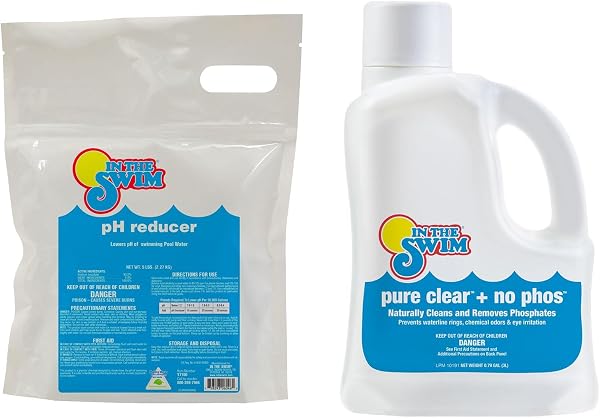
The product arrives as a white, coarse granular powder in a resealable bucket (available in 5 lb, 10 lb, and 25 lb sizes). It’s the same active ingredient many professional pool services use — sodium bisulfate, also known as dry acid. Unlike muriatic acid (hydrochloric acid), this won’t produce caustic fumes when you open the container, and a splash won’t send you to urgent care.
The bucket includes a measuring scoop, which matters more than you’d think. Getting dosage right with granular acid is less forgiving than with liquid — more on that below.
Real-World Performance
Here’s the honest breakdown: this works, but it works differently than muriatic acid. You’ll dissolve the granules in a 5-gallon bucket of water first, then pour the solution around the pool perimeter while the pump runs. It lowers both pH and total alkalinity, which is exactly what you want when your pH is creeping above 7.8 and your alkalinity is running high.
The tradeoff is speed. Muriatic acid drops pH almost immediately. Sodium bisulfate takes several hours to fully circulate and register on your test kit. That’s not a defect — it’s just chemistry. Plan to add it in the evening and retest in the morning.
One thing buyers consistently praise is the safety factor. As one pool owner put it: “I used to hold my breath and pour muriatic acid like a bomb disposal tech. This feels like adding salt. No fumes, no panic.” Another noted: “I keep a bucket on hand for my hot tub — way easier than storing liquid acid near the house with kids around.”
Where It Falls Short
Let’s be direct about the downsides. First, cost per treatment runs higher than muriatic acid. You’ll use roughly 1.5 to 2 times more product by weight to achieve the same pH drop. If you’re managing a large in-ground pool with chronic pH creep, that adds up over a season.
Second, the pre-dissolving step is non-negotiable. Dump dry granules directly into the pool and you risk bleaching a vinyl liner or leaving white spots on plaster. Several negative reviews trace back to exactly this mistake. Read the label, follow the bucket method, and you’ll be fine — but this isn’t a “sprinkle and walk away” product.
Third, it’s slower. If you’re prepping for a party and your pH is way out of range, you can’t rush this. Muriatic acid gives you same-day correction; this needs overnight.
Who Should Buy This
Buy it if: You’re a homeowner with a vinyl-lined or fiberglass pool, you have kids or pets around, or you simply hate handling liquid acid. It’s also ideal for spa and hot tub owners who want a safer option for small water volumes. If you’re new to pool chemistry, the forgiving nature of this product makes it a smart starting point.
Skip it if: You maintain a large commercial pool, you need rapid pH correction, or you’re on a tight budget and already comfortable handling muriatic acid safely.
FAQ
How much do I use? Typical dose is 1 lb per 10,000 gallons to lower pH by 0.2. Always dissolve in a bucket of water first and test after 6-12 hours.
Can I use this in a saltwater pool? Yes. Sodium bisulfate won’t interfere with salt chlorine generators. Just follow normal dosage and circulate thoroughly.
Does it lower alkalinity too? Yes, it reduces both pH and total alkalinity. If your alkalinity is already low, go easy — you can overshoot and create pH bounce.
The Verdict
Rating: 4.6/5
In The Swim pH Reducer is the right call for most residential pool owners who prioritize safety and convenience over speed and cost. It’s not a perfect replacement for muriatic acid — slower, pricier per treatment, and unforgiving if you skip the pre-dissolve step — but for the typical backyard pool, the tradeoffs are worth it. Buy it if you want to stop handling liquid acid. Skip it if you’re a pro who needs fast, cheap correction at scale.
Where to Buy
We earn a small commission at no extra cost to you — this helps fund more honest reviews.
Last updated: 2026-08-06. Ratings and prices current as of review date. Verify on Amazon before purchasing.
More Patio, Lawn & Garden Verdicts