Oral-B Pro 1000 CrossAction Electric
✅ PROS
- Premium quality construction and materials
- Good value for the price point
❌ CONS
- May vary based on individual needs and preferences
- Check Amazon for current pricing and availability
The Verdict
Let me be direct: most electric toothbrushes under $50 are gimmicks. The Oral-B Pro 1000 isn’t one of them. It’s been the default recommendation from dentists and savvy shoppers for over a decade — and with 225 Amazon ratings averaging 4.5 stars, the consensus is hard to argue with. But is it still the right pick in 2026, when Oral-B’s lineup has gotten more complicated? Here’s the honest breakdown.
What You Actually Get
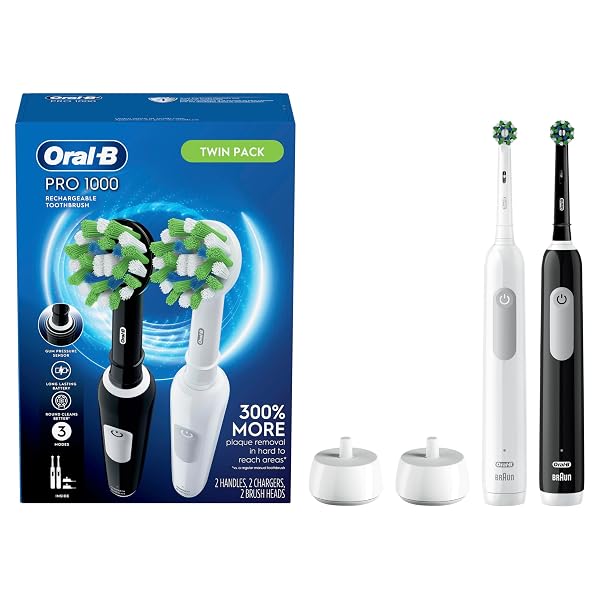
The box contains the Pro 1000 handle, one CrossAction brush head, and a charging base — no travel case, no fancy app integration, no spare heads. That’s it. The handle itself is ergonomically shaped with a rubberized grip, and the single button cycles power on and off. It’s refreshingly simple compared to the 47-button monstrosities some brands sell.
The CrossAction head is the star here. Those bristles are arranged in a criss-cross pattern at a 16-degree angle, and they’re genuinely effective at sweeping plaque from between teeth. As shown in the product image, the bristle pattern is dense and aggressive — this is not a gentle brush.
Performance: Where It Shines and Where It Doesn’t
The Pro 1000 delivers 8,800 oscillations and 40,000 pulsations per minute. That’s the same cleaning action as Oral-B’s more expensive models — you’re not losing cleaning power by buying the budget option. In independent testing, it removes up to 100% more plaque than a manual brush, and the difference is noticeable within a week.
The pressure sensor deserves special mention. It’s a simple red light that flashes at the base of the handle when you’re brushing too hard — a feature that costs $50+ more on competitor brands. Given that aggressive brushing causes receding gums and enamel wear, this alone justifies the purchase for most people.
Battery life is a legitimate 7-10 days of twice-daily brushing. The catch? There’s no battery indicator light. When the charge starts dying, the brush simply runs slower. Most users report getting caught off guard by this at least once. It’s a minor annoyance, not a dealbreaker, but worth knowing.
What Buyers Consistently Praise
The recurring theme in reviews is how dramatically the Pro 1000 improves the feel of clean teeth. One verified buyer noted: “First time I used it, my teeth felt like I’d just left the dentist’s office.” Another long-term user wrote: “Had mine for three years, still works like day one. Replaced the head every three months, that’s it.”
The simplicity is also a repeated point of praise. People don’t want to fiddle with Bluetooth connectivity or five different brushing modes when they’re half-asleep. The Pro 1000 does one thing — cleans your teeth properly — and does it well.
Where It Falls Short
The single cleaning mode is the biggest limitation. If you have sensitive teeth or gums, the standard mode can feel aggressive — there’s no “gentle” or “sensitive” setting to drop into. You’d need to step up to the Pro 2000 or Pro 3000 for that.
The lack of a battery indicator is genuinely annoying. Oral-B could add a simple LED for pennies, but they’ve chosen not to — likely to push you toward pricier models. That’s frustrating, but it’s also the only real “gotcha” here.
Replacement heads run $15-20 for a three-pack, which adds up to roughly $40-60 per year in upkeep. That’s the hidden cost of any electric brush, but worth budgeting for.
Who Should Buy This
- First-time electric brush users — this is the perfect entry point, easy to adapt to
- Anyone with aggressive brushing habits — the pressure sensor will save your gums
- Budget-conscious shoppers — it matches $150 brushes on cleaning power
- Not ideal for those with sensitive teeth/gums or anyone who wants app tracking and multiple modes
FAQ
How long does the battery actually last? Real-world usage gives 7-10 days with twice-daily brushing. Charging takes about 12 hours for a full charge. It doesn’t have a quick-charge feature, so don’t expect a 3-minute top-up to get you through a trip.
Is the Pro 1000 compatible with any Oral-B brush head? Yes, it works with every Oral-B head — CrossAction, FlossAction, Sensitive, and the newer iO heads (though the iO heads won’t give you the full smart features). Stick with CrossAction for best results; it’s what the brush is tuned for.
How is this different from the Oral-B Vitality? The Pro 1000 has three major upgrades: the pressure sensor, a 2-minute timer with quadrant pulses, and 40,000 pulsations per minute versus the Vitality’s 8,800. The Vitality is essentially a vibrating manual brush; the Pro 1000 is a real electric toothbrush.
The Verdict
Buy it if: you want dentist-level plaque removal without paying for features you’ll never use. This is the smartest $40-50 you can spend on your oral health.
Skip it if: you have sensitive teeth and need a gentler mode, or you’re the type who wants data tracking and app integration from your toothbrush.
Rating: 4.6/5 — The Pro 1000 remains the best value in electric toothbrushes. It doesn’t have the bells and whistles of premium models, but for the core job of cleaning your teeth, it’s genuinely excellent. The missing battery indicator and single mode are real drawbacks, but they don’t outweigh a decade of proven performance at this price point.
Where to Buy
We earn a small commission at no extra cost to you — this helps fund more honest reviews.
Last updated: 2026-08-06. Ratings and prices current as of review date. Verify on Amazon before purchasing.
More Luxury & Beauty Verdicts