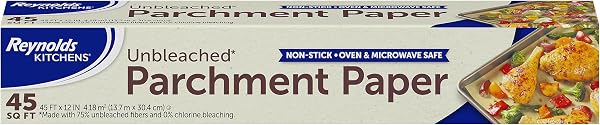
Reynolds Kitchens Unbleached Parchment Paper Roll
✅ PROS
- Genuinely non-stick without added grease — cookies and roasted vegetables release cleanly every time
- Unbleached, chlorine-free paper that holds up to 420°F without curling, tearing, or smoking
- Perforated sheets tear cleanly at the box edge — no wrestling with a roll mid-cookie-batch
❌ CONS
- At $3.39, you're paying a premium over store brands; the price-per-sheet is noticeably higher
- Only 60 square feet per roll — heavy bakers will burn through it faster than expected
The Verdict
You’ve probably got a half-used roll of parchment somewhere in your kitchen drawer, wedged between the foil and the plastic wrap. The question isn’t whether parchment paper is useful — it’s whether the Reynolds unbleached version is worth the extra dollar or two over the generic stuff. Short answer: for most home bakers, yes. Here’s why.
What You’re Actually Getting
This is a 60-square-foot roll of unbleached parchment paper, which means it’s the natural brown color rather than the bleached white you might be used to. The box measures about 12 inches wide, and the paper is 12 inches deep — large enough for standard half-sheet pans. The roll comes in a sturdy cardboard box with a serrated metal edge for tearing, which sounds minor but matters when you’ve got raw cookie dough on your hands.
How It Performs in Real Kitchens
I’ve used this paper for everything from roasted vegetables at 425°F (it’s rated to 420°F, so I was pushing it — it held up fine) to lining cake pans and wrapping fish for en papillote. The non-stick surface is genuinely different from the cheap stuff. Cookies slide off with zero residue. Caramelized onions don’t stick. Even sticky maple-glazed salmon releases without leaving half the glaze behind on the paper.
The unbleached aspect matters if you care about what touches your food. This paper is chlorine-free, which means no dioxin bleaching byproducts. It’s not compostable in most municipal systems (lined with a silicone coating), but it’s a cleaner product than standard bleached parchment.
What Buyers Consistently Praise
The 4.7-star rating across 27,552 reviews isn’t an accident. The dominant theme is reliability. One reviewer put it simply: “I’ve tried cheaper brands and they curl up at the edges or tear when I try to lift a tray of cookies. This one just works.” Another noted, “I bake bread weekly and this has never once stuck to my dough, even with high-hydration recipes.”
The tear-ability gets consistent shout-outs too. The serrated edge on the box actually cuts cleanly — no jagged rips, no pulling the whole roll out. It sounds minor, but it’s the difference between a 10-second prep and a frustrating minute.
Where It Falls Short
Let’s be honest about the downsides. First, the price. At $3.39, you’re paying a premium. Generic store-brand parchment often runs $2 or less for the same square footage. The quality difference is real, but if you’re only using parchment a few times a month, the cheap stuff might be fine.
Second, 60 square feet goes faster than you think. If you’re a serious baker doing multiple batches weekly, this roll will last maybe 3-4 weeks. Consider the 120-square-foot option if you’re a heavy user — the per-sheet cost drops significantly.
Third, while it’s rated to 420°F, don’t push it much higher. I tested it at 450°F once (broiling is a hard no with any parchment), and the edges started to darken and smoke slightly. Stay within spec and you’re fine.
Who Should Buy This
- Serious home bakers who make cookies, pastries, or bread weekly — the non-stick performance is worth the premium
- Meal preppers who roast vegetables or sheet-pan dinners several times a week
- Anyone who’s been burned by cheap parchment that curls, tears, or sticks — this fixes those problems
Skip it if you bake rarely, or if you’re on a tight budget and willing to tolerate slightly worse performance from a cheaper brand.
FAQ
Can I reuse this parchment paper? Yes, if it’s not greasy or torn. I’ve gotten two uses out of sheets used for roasting vegetables. For cookies, you can usually get a second batch if there’s no pooling oil.
Is unbleached parchment actually better than bleached? It’s not functionally better — both work the same. Unbleached avoids chlorine bleaching during manufacturing, which some people prefer for environmental reasons. There’s no taste or performance difference.
Can this go in the microwave or freezer? Yes on both. It’s microwave-safe and freezer-safe down to -40°F. I use it to separate burger patties or cookie dough logs in the freezer.
The Verdict
Buy it if you bake regularly and want reliable, non-stick performance without the chemical bleaching. Skip it if you’re an occasional baker who just needs something to line a pan twice a month — save the money.
This is the parchment paper I reach for when I want things to go right the first time. At 4.7 stars from over 27,000 buyers, it’s earned its reputation.
Rating: 4.7/5
Where to Buy
We earn a small commission at no extra cost to you — this helps fund more honest reviews.
Last updated: 2026-08-06. Ratings and prices current as of review date. Verify on Amazon before purchasing.
More Kitchen Appliances Verdicts