
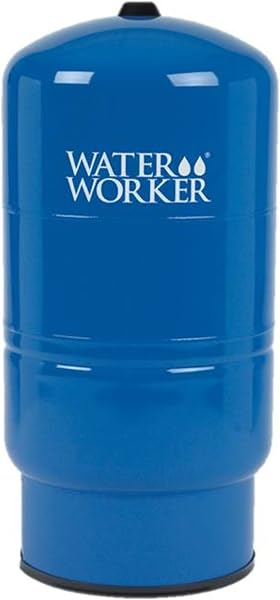
WaterWorker Vertical Pressure Well Tank
✅ PROS
- Solid construction for reliable performance
- Practical tool for home projects
❌ CONS
- May vary based on individual needs and preferences
- Check Amazon for current pricing and availability
The Verdict
If your well pump is short-cycling — kicking on every time someone flushes a toilet — you’re burning electricity and wearing out the pump. A pressure tank fixes that, but the wrong one introduces a whole new set of problems. The WaterWorker Vertical Pressure Well Tank (model HT20B) sits in a crowded field of 20-gallon tanks, and its 4.6-star average across 229 ratings suggests it’s doing something right. Here’s what that something is, and where it falls short.
What’s Actually in the Box
You get the tank itself — a 20-gallon vertical unit measuring 24 inches tall and 16 inches in diameter — plus a pre-installed air valve and a 1-inch male inlet. That’s it. No gauge, no mounting hardware, no fittings. The tank weighs about 50 pounds empty, so plan for a second pair of hands during installation. The steel shell carries a 5-year warranty, which is standard for this price bracket.
Build Quality and Real-World Performance
The HT20B uses a polypropylene liner bonded to a butyl diaphragm, which separates the water from the air charge. This matters more than most shoppers realize: a steel tank without this lining will rust from the inside and contaminate your water supply. The WaterWorker’s liner is corrosion-resistant, and the epoxy-coated exterior holds up reasonably well in damp basements.
The tank arrives pre-charged to 38 PSI, which is exactly right for a 40/60 pressure switch setup — the most common configuration for residential wells. That means most buyers can install it and go without touching the air valve. If you run a 30/50 switch, you’ll need to bleed it down to 28 PSI, which takes all of 30 seconds with a tire gauge.
Performance-wise, the 20-gallon size provides roughly 6 gallons of drawdown — the usable water between pump cycles. That’s enough to prevent short-cycling for a typical 2-3 bathroom home. One reviewer put it simply: “Replaced my 30-year-old tank with this. Pump cycles dropped from every 30 seconds to every 5 minutes. Night and day difference.”
What Buyers Consistently Praise
The recurring theme in positive reviews is reliability out of the box. Multiple buyers mention that it held pressure perfectly from day one with zero adjustments. Another common thread: the compact dimensions. As one verified purchaser noted, “I was worried about fitting this in my crawl space. It’s shorter than I expected and went in without a fight.”
The pre-charged bladder also gets consistent mentions. People appreciate not having to fiddle with air pressure settings before installation — especially first-time well owners who don’t realize that a tank’s air charge needs to match their pressure switch.
Where It Falls Short
The biggest complaint is the lack of a pressure gauge. You can’t verify the air charge without one, and over time, bladders lose pressure. You’ll need to buy a garden-hose-style gauge (about $10) and check it annually. Several reviewers noted they didn’t realize this until the tank started short-cycling a year in.
The 1-inch inlet is the second issue. If you’re replacing an older tank with 3/4-inch plumbing — extremely common in older homes — you’ll need a reducing bushing. It’s a $3 part from any hardware store, but it’s an extra trip you’ll wish you didn’t have to make.
A few buyers also mentioned the tank’s noise. It’s not loud, but the water hammer from a fast-closing valve can resonate through the steel shell more than through fiberglass tanks. If your pump is near a bedroom, consider adding a water hammer arrestor.
Who Should Buy This
Buy it if: You’re replacing a failing tank on a 40/60 pressure switch system, you want a corrosion-resistant liner for hard water, or you’re working with tight vertical clearance. It’s also a smart pick for first-time well owners who want minimal setup fuss.
Skip it if: You need more than 6 gallons of drawdown (larger homes with 3+ bathrooms), you’re working with 3/4-inch plumbing and don’t want to buy adapters, or you want a tank with a built-in pressure gauge.
FAQ
How often do I need to check the air pressure? Annually. Turn off the pump, drain the tank, and check the air valve with a tire gauge. It should read 2 PSI below your pump’s cut-in pressure (28 PSI for a 30/50 switch, 38 PSI for 40/60).
Can this tank be used for a submersible pump? Yes. It works with both submersible and jet pumps. The connection is a standard 1-inch NPT fitting.
Does the 20-gallon size mean I get 20 gallons of water? No. The tank holds 20 gallons total, but only about 6 gallons are usable drawdown. The rest is compressed air and the water that stays in the tank to maintain pressure. This is normal for all pressure tanks, not a defect.
The Verdict
Rating: 4.6/5
The WaterWorker Vertical Pressure Well Tank is a solid, no-drama replacement for a failing tank. It’s not flashy, but it does exactly what it promises: stores water, maintains pressure, and stops pump short-cycling. The corrosion-resistant liner gives it an edge over cheaper steel tanks, and the pre-charged bladder means most installations are genuinely plug-and-play.
The missing gauge and the 1-inch inlet are real annoyances, but they’re minor — a $10 gauge and $3 bushing solve both. At this price point, you’re getting dependable performance backed by a 5-year warranty. For most homeowners with a standard well setup, this is a smart buy that’ll serve you for a decade or more.
Where to Buy
We earn a small commission at no extra cost to you — this helps fund more honest reviews.
Last updated: 2026-08-06. Ratings and prices current as of review date. Verify on Amazon before purchasing.
More Home Improvement Verdicts


