
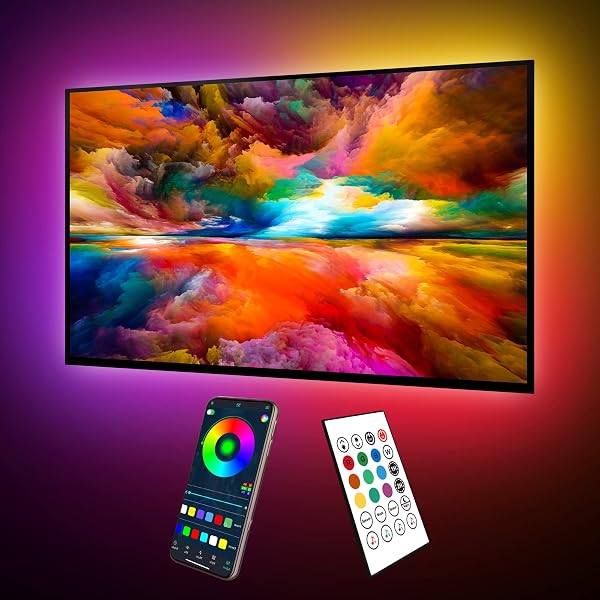
maylit ICRGB TV LED Backlight
✅ PROS
- Modern features and smart functionality
- Good value for the price point
❌ CONS
- May vary based on individual needs and preferences
- Check Amazon for current pricing and availability
The Verdict
The maylit ICRGB TV LED Backlight is the kind of product that sounds like a gimmick until you see it working. Unlike the cheap $15 LED strips that glow one static color, this kit uses a small camera pointed at your screen to sample what’s playing and mirror those colors onto your wall in real time. It’s essentially a budget take on Philips Hue’s Ambilight — and at roughly a third of the price, it has 215 Amazon reviewers averaging 4.3 stars. But is the savings worth the setup headaches? Let’s break it down.
What’s in the Box
You get the LED strip kit (sized to your TV), the camera sensor, a control box, and the power adapter. The strip itself uses ICRGB — individually controlled RGB LEDs — which is the key differentiator here. Each LED can display a different color simultaneously. That’s what creates the immersive “colors bleed off the screen” effect rather than the whole wall shifting one shade at a time. The adhesive is 3M-grade and, per multiple reviews, sticks aggressively well. One buyer noted, “The adhesive is no joke — I had to use a heat gun to reposition mine.”
The camera is the catch. It mounts to the top or bottom bezel of your TV and physically looks at the screen. That means you need a clear line of sight, and the included mounting bracket is a bit clunky. On a wall-mounted TV, it’s visible and slightly ugly. There’s no way around it unless you’re willing to DIY a hideaway.
Real-World Performance
When it’s calibrated well, this thing looks great. Colors track reasonably close to what’s on screen, and the ICRGB LEDs do produce distinct zones of color rather than a muddy blend. For movies and ambient lighting, it genuinely elevates the viewing experience. Skin tones aren’t perfectly matched — you’ll get a slight orange or blue cast on the wall — but for the price, it’s impressive.
Where it falls apart is gaming. The camera-based sync has inherent latency. Fast camera pans and quick scene cuts cause a visible lag where the wall colors trail behind the action. One reviewer put it plainly: “Great for movies, but I turn it off for FPS games — the delay is distracting.” There’s also the brightness issue. In a dark room, the LEDs can actually overwhelm the TV’s own picture at higher settings, so you’ll want to dial them back.
Where It Falls Short
The calibration process is the biggest complaint across reviews. You have to hold colored cards up to the screen and adjust the camera’s view until it reads correctly. It’s fiddly, and reviewers report needing 10–15 minutes to get it right. Some never fully do. Bright HDR content can cause the camera to blow out and lose tracking, resulting in the wall going white or strobing briefly.
The control box is also dated. It uses physical buttons and a simple IR remote rather than an app. There’s app support, but it’s clunky and requires creating an account. You can’t do granular zone control per LED — it’s all automatic.
Who Should Buy This
- Movie and TV binge-watchers who want that theater-like glow without dropping $250+ on Philips Hue
- People with multiple devices (streaming sticks, consoles, cable boxes) — since it’s camera-based, it works with everything without HDMI splitting
- DIYers comfortable with a 15-minute calibration setup
Skip it if you’re a competitive gamer who needs zero latency, or if your TV is flush-mounted on a wall where the camera would be impossible to hide.
FAQ
Q: Does it work with Dolby Vision or HDR content? A: Sort of. The camera struggles with very bright HDR scenes — it can blow out and lose color tracking temporarily. Standard SDR content works best.
Q: Can I cut the LED strips to fit my TV size? A: Yes, the strips have cut marks every few inches. But cutting them voids the warranty and reduces the number of individually controlled zones, so only do it if you absolutely must.
Q: Does the camera need to see the entire screen? A: Yes, and this is the make-or-break detail. If the camera can’t see the full screen edge-to-edge, the colors won’t sync properly. This is why calibration is so picky.
The Verdict
Buy it if: You want immersive bias lighting for movies and TV, use multiple devices, and don’t mind a 15-minute setup. At this price point, the ICRGB effect is genuinely impressive.
Skip it if: You’re a competitive gamer, want a clean wall-mounted aesthetic, or expect Philips Hue-level polish. The camera is a compromise you’ll have to live with.
Rating: 4.2/5 — A solid budget Ambilight alternative that nails the effect but stumbles on calibration and gaming latency.
Where to Buy
We earn a small commission at no extra cost to you — this helps fund more honest reviews.
Last updated: 2026-08-06. Ratings and prices current as of review date. Verify on Amazon before purchasing.
More Home Improvement Verdicts


