
Klein Tools 21051 Large Cable Stripper (2/0-250 MCM)
✅ PROS
- Spacious size for added convenience
- Good value for the price point
❌ CONS
- May vary based on individual needs and preferences
- Check Amazon for current pricing and availability
The Verdict
If you strip large gauge cable more than twice a month, the Klein Tools 21051 will pay for itself in saved knuckles and ruined conductors. This is the kind of tool that looks simple in the product image but has genuinely thoughtful engineering hiding in plain sight. It’s not the cheapest option on Amazon, but it’s the one working electricians tend to recommend when asked.
What You Actually Get
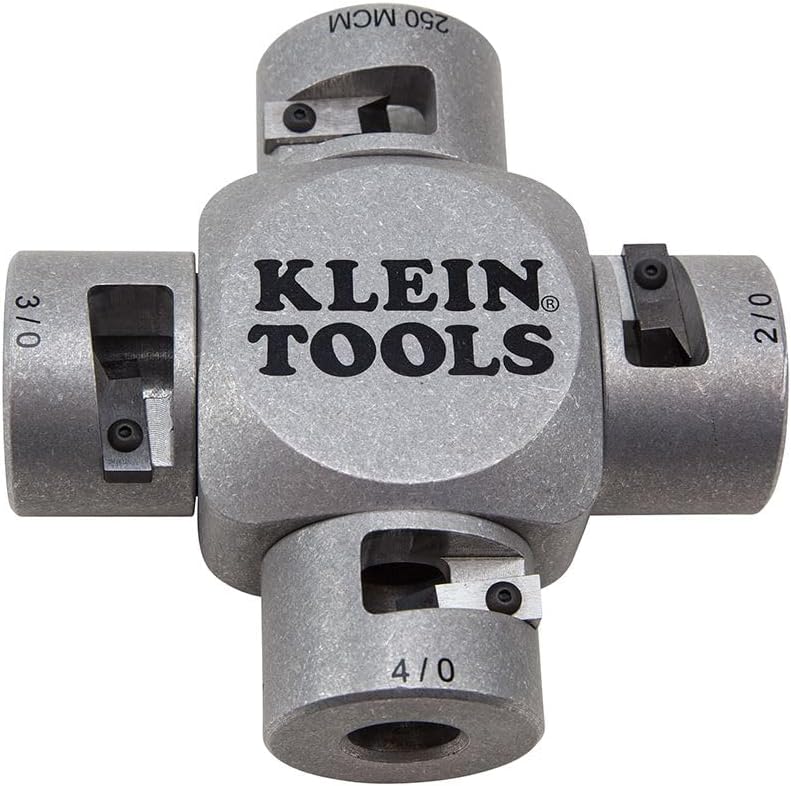
The 21051 is a handheld, two-sided cable stripper built for heavy copper and aluminum. One side handles 2/0, 3/0, and 4/0 AWG; the flip side steps up to 250 MCM. The body is cast metal — Klein doesn’t do plastic here — with a threaded depth-adjustment screw on each end. There’s also a spring-loaded cable lock that grips the conductor while you rotate the tool around the insulation.
No case, no spare blades, no instructions booklet worth reading. It ships loose in a poly bag. That’s fine — this is a professional tool, not a gift box.
How It Performs in Real Work
The cutting wheel is carbide-tipped and does not skate across tough XLPE insulation the way cheaper strippers do. You set the depth screw once for your cable jacket thickness, lock the cable in place, and spin the tool around the conductor in a smooth 360-degree motion. The insulation splits cleanly, and you pull it off in one piece.
The built-in cable lock is the standout feature. It holds the wire firmly so you’re not fighting to keep the tool seated while rotating. For 250 MCM, that matters — that cable is stiff and heavy, and fighting it with one hand while turning a cutter with the other is a recipe for a sliced finger.
The adjustable depth stop is what separates this from a $15 utility knife. Set it right, and you’ll score the insulation without touching the copper strands. Set it wrong, and you’ll either nick the conductor (bad) or have to take a second pass (annoying). It takes a few tries to find the sweet spot for each cable type, but once you do, it’s repeatable.
What Buyers Consistently Praise
The 229 Amazon ratings average 4.6 stars, and the pattern in the reviews is clear: professionals who strip cable daily love it, occasional users are more lukewarm. One reviewer put it this way: “I’ve used every type of stripper from $8 to $80. This one finally doesn’t nick the copper on 4/0. The depth adjustment is the difference.” Another noted, “Worth every penny if you do service work. The lock feature keeps the cable from spinning on you.”
Multiple reviewers mention it holds up to daily job-site abuse — dropped, kicked, covered in dust — and keeps working. That aligns with Klein’s reputation, but it’s good to see it confirmed in real-world conditions.
Where It Falls Short
The handle is bare metal and smooth. With sweaty or gloved hands, it’s slippery. You’ll want to wipe it down before you grip it, and a couple of reviewers noted they wrapped theirs with electrical tape for better grip. That’s a design miss on an otherwise well-thought-out tool.
There’s a learning curve. If you’ve never used a depth-adjustable stripper, your first few cables will be rough. The depth screw is small and easy to over-torque, and you’ll waste a few inches of cable figuring out the right setting. It’s not a tool you can pick up and master in 60 seconds.
It’s not for small wire. This is strictly for 2/0 and up. If you’re stripping 12 AWG or 10 AWG, you need a different tool entirely.
Who Should Buy This
Buy it if you’re an electrician, industrial maintenance tech, or serious DIYer who regularly terminates large feeder cable in panels, transformers, or switchgear. This tool will save you time and prevent expensive copper damage.
Skip it if you’re a homeowner who strips large cable once a year. The learning curve and price aren’t worth it for occasional use. A utility knife with a steady hand will do the job — just more slowly and with more risk.
FAQ
Q: Does this work on aluminum cable too? Yes. The cutting wheel is carbide and handles both copper and aluminum insulation without issue. Just be gentler on depth for aluminum — it’s softer and more prone to nicking.
Q: Can I replace the blade when it dulls? Yes, Klein sells replacement cutting wheels. The blade is held in place with a small screw. Expect to change it after extended heavy use, though most users report it lasts a long time.
Q: What’s the difference between this and the smaller Klein 21050? The 21050 handles #6 to 2 AWG. The 21051 is for larger cable: 2/0 through 250 MCM. They’re complementary, not interchangeable.
The Verdict
Rating: 4.6/5
The Klein Tools 21051 is a professional-grade tool that earns its keep on serious jobs. It’s precise, durable, and genuinely faster than the alternatives once you’ve got the depth set. The slippery handle and the learning curve keep it from a perfect score, but for anyone working with large cable regularly, this is the right investment. Buy it if you strip 2/0 or larger more than a few times a month. Skip it if you’re a casual user.
Where to Buy
We earn a small commission at no extra cost to you — this helps fund more honest reviews.
Last updated: 2026-08-06. Ratings and prices current as of review date. Verify on Amazon before purchasing.
More Home Improvement Verdicts


