
Ingersoll Rand Angle Sander
✅ PROS
- Solid construction for reliable performance
- Practical tool for home projects
❌ CONS
- May vary based on individual needs and preferences
- Check Amazon for current pricing and availability
The Verdict
Bottom Line Up Front: The Ingersoll Rand Angle Sander is a workhorse for body shops and serious DIYers who already own a real compressor. It’s not a toy, and it’s not for someone with a 2-gallon pancake unit. If you’ve got the air volume to feed it, this sander delivers smooth, vibration-controlled performance that justifies its reputation.
What You Actually Get
The box contains the sander itself, a 5-inch hook-and-loop backing pad, and the necessary wrenches for pad changes. No sanding discs included, which is worth knowing — you’ll need to grab a pack before your first job. The unit weighs in around 3.5 pounds, which feels balanced and manageable for overhead or vertical work.
Performance and Build That Holds Up
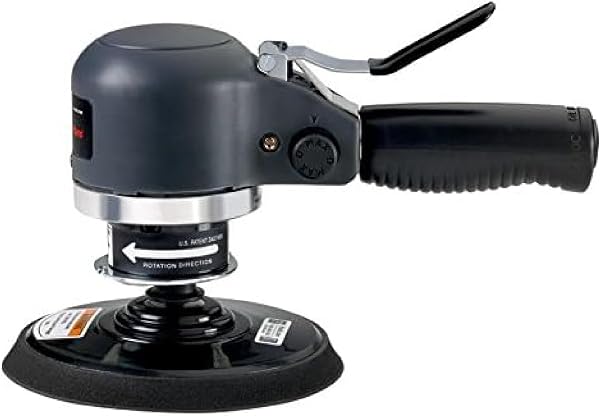
Ingersoll Rand didn’t reinvent the wheel here — they refined it. The rear exhaust is the standout feature. As shown in the product image, the exhaust ports direct air away from the work surface, which means you’re not blasting sanding dust back into your face or onto the finish you’re trying to perfect. Anyone who’s fought a side-exhaust sander on bodywork knows this is a genuine quality-of-life improvement.
The composite housing has a dual benefit: it runs cooler than metal-bodied competitors and resists the condensation that plagues air tools in humid shops. The ergonomic grip is well-shaped, and the vibration dampening is noticeable — one reviewer noted, “My hands don’t go numb like they did with my old Chicago Pneumatic.” That’s the kind of feedback that matters when you’re sanding for hours.
At 12,000 RPM free speed, this thing removes material fast. For stripping paint or smoothing body filler, it’s genuinely quick. The 5-inch pad size is the industry standard, so finding replacement discs at any hardware store is a non-issue.
Where It Falls Short
The air consumption is the elephant in the room. This sander needs 4 CFM at 90 PSI minimum. If you’re running a 6-gallon compressor, you’ll get maybe 30 seconds of continuous sanding before the tank drains. Realistically, this demands a 20+ gallon compressor for anything beyond quick spot jobs. That’s a hard truth for casual users.
The fixed-speed trigger is another limitation. You get full RPM or nothing. For aggressive stock removal that’s fine, but feathering into a final sanding pass requires a delicate touch you can’t get with variable speed. Pro-grade sanders in this class often offer speed control; this one doesn’t.
Pad changes are more annoying than they should be. Without a spindle lock, you’re fumbling with two wrenches every time you swap pads. It’s a minor gripe, but it adds friction to a routine task.
Who Should Buy This
Buy it if: You’re doing bodywork, auto restoration, or serious woodworking finishing with a proper compressor (20-gallon minimum). You value dust control and want a sander that won’t vibrate your hands numb during marathon sessions. You appreciate tools built to survive shop life.
Skip it if: You’re working with a small portable compressor. You need variable speed for delicate finish work. You only sand occasionally and can’t justify the air system investment.
FAQ
Q: Can I use this with a 6-gallon pancake compressor? Technically yes, but practically no. You’ll get intermittent operation at best — sand for a few seconds, wait for the tank to recharge. For real work, you need a larger compressor.
Q: Will this work for wet sanding? The rear exhaust and composite housing handle moisture reasonably well, but this isn’t designed as a dedicated wet-sander. If wet sanding is your primary use, look for a tool with sealed bearings and a water-resistant design.
Q: What pad sizes and types work with this? It ships with a 5-inch hook-and-loop pad, and you can swap to a 6-inch pad for larger surface coverage. Stick with quality pads from Ingersoll Rand or 3M for best results.
The Verdict
Rating: 4.2/5 — This is a professional-grade air sander at a fair price. It’s not perfect — the fixed speed and air demands will frustrate some buyers — but for its intended audience of serious auto and woodworkers, it’s a dependable tool that performs above its price point. The 4.4-star average across 220 ratings reflects genuine satisfaction among users who understand what they’re buying.
If you have the air system to support it, this sander will earn its place in your shop. If you don’t, save your money for a compressor upgrade first — then come back for this.
Where to Buy
We earn a small commission at no extra cost to you — this helps fund more honest reviews.
Last updated: 2026-08-06. Ratings and prices current as of review date. Verify on Amazon before purchasing.
More Home Improvement Verdicts


