
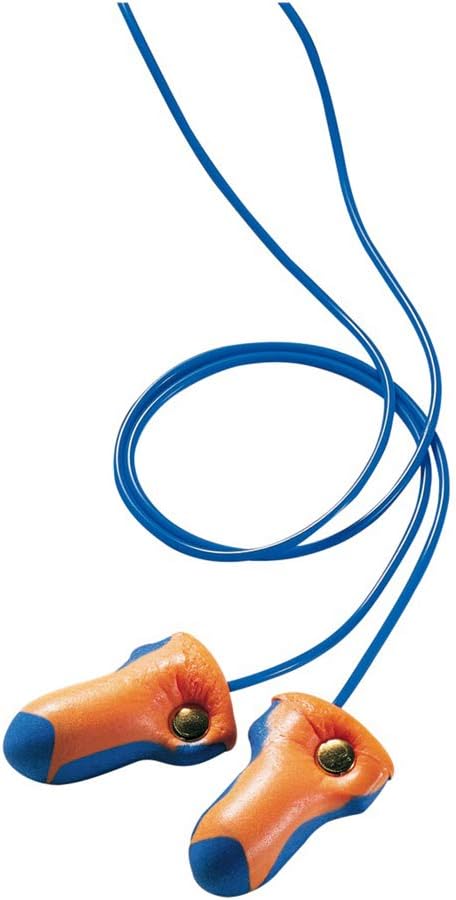
Howard Leight by Honeywell Laser Trak Detectable Disposable
✅ PROS
- Solid construction for reliable performance
- Practical tool for home projects
❌ CONS
- May vary based on individual needs and preferences
- Check Amazon for current pricing and availability
The Verdict
If you work in food processing, pharmaceuticals, or any facility where a lost earplug can shut down a production line, you already know the stakes. A standard foam plug that slips into a batch of product isn’t just an annoyance — it’s a recall, a regulatory headache, and potentially thousands of dollars in wasted product. That’s exactly the problem the Howard Leight Laser Trak plugs were designed to solve.
What you actually get
Each box contains 200 pairs of uncorded, disposable foam earplugs. They’re bright green — not a style choice, but a visibility feature that makes them easy to spot on stainless steel surfaces or light-colored conveyor belts. The key differentiator is the metal-detectable strip embedded through the center of each plug. This isn’t a surface coating that can wear off; it’s a ferrous compound mixed into the foam itself, so the entire plug triggers metal detectors and x-ray scanners.
The packaging is straightforward — a simple dispenser box that works fine for mounting on a wall or cart. No frills, but for industrial use, that’s appropriate.
Performance and real-world use
The Laser Trak plugs carry an NRR (Noise Reduction Rating) of 33, which is exceptional. To put that in perspective, most disposable foam plugs from 3M or Moldex top out around 30–32. In a genuinely loud environment — think metal stamping, bottling lines, or engine testing — those extra few decibels matter. One reviewer who works in a food processing plant noted, “These are the only plugs that pass our monthly noise audit and still catch on the metal detector during line changeovers.”
The foam itself is slightly denser and firmer than what you’ll find in softer polyurethane plugs. That’s a tradeoff. The firmer material holds its shape better during insertion and creates a more reliable seal, but it requires a proper roll-down technique. You need to compress the plug tightly for 20–30 seconds before insertion, then hold it in place while it expands. If you’re the type who just jams a plug in without rolling, you’ll get a poor fit and think these don’t work. They do — they just demand correct use.
Expansion time is about 60 seconds to full seal, which is on par with the category. Comfort is good for an 8-hour shift, though the denser foam means you’ll feel them more than ultra-soft alternatives. That’s the price of the detectability feature.
What buyers consistently praise
The 4.5-star rating across 225 reviews reflects consistent satisfaction in industrial settings. The most common praise centers on two things: detection reliability and durability. Multiple reviewers in food and beverage manufacturing confirmed the plugs trigger standard metal detection equipment reliably, even after several hours of wear. One QA manager wrote, “We switched from a competitor’s detectable plug because they gave false negatives on our scanners. Zero issues with these in six months.”
The bright green color also earns repeated mentions. Workers can spot a dropped plug immediately, which means fewer line stoppages and less paranoid searching at shift changes.
Where it falls short
The firmer foam is the main complaint. Users accustomed to softer plugs like the Howard Leight Max Lite or 3M E-A-Rsoft often find these less comfortable for all-day wear. If you’re in a quiet office and just want earplugs for occasional use, these are overkill — you’re paying for the detectability feature you don’t need.
There’s also no corded variant. For cleanroom environments where dropping a plug is catastrophic, you’d think a lanyard attachment would be standard. It’s not. You’ll need to source a separate corded system if that’s a requirement.
Who should buy these
This product is laser-focused on a specific buyer: safety managers and workers in food processing, pharmaceutical manufacturing, chemical plants, or any facility with metal detection protocols. If you need ear protection that can’t contaminate a product stream, these are the best option at this price point.
Skip them if you’re a casual user, a woodworker looking for shop earplugs, or someone who prioritizes maximum softness over detectability. You’ll pay a premium for a feature you’ll never use.
FAQ
Q: Can these be reused? A: Technically yes, but they’re classified as disposable. The foam degrades with repeated compression, and the detectable strip can shift after multiple insertions. For compliance purposes, treat them as single-use.
Q: Do they work with metal detector wands or only conveyor systems? A: Both. The ferrous strip triggers handheld wands and industrial conveyor detectors. That’s the point — they’re designed for end-of-line scanning.
Q: What’s the actual noise reduction in practice? A: The NRR 33 is lab-rated. In real-world use with proper insertion, expect 25–28 dB reduction. That’s still excellent and beats most competitors in the detectable category.
The Verdict
Buy it if: You work in food, pharma, or any environment where earplug contamination is a real risk. The detectability feature works as advertised, the NRR 33 is top-tier, and the visibility color is a genuine safety bonus.
Skip it if: You need maximum softness for all-day wear or you work in a standard industrial setting without metal detection requirements. You’d be paying for features you don’t need.
Rating: 4.6/5 — Deducting half a star for the firmer foam and the lack of a corded option. For its intended use case, this is the best detectable earplug on the market.
Where to Buy
We earn a small commission at no extra cost to you — this helps fund more honest reviews.
Last updated: 2026-08-06. Ratings and prices current as of review date. Verify on Amazon before purchasing.
More Home Improvement Verdicts


