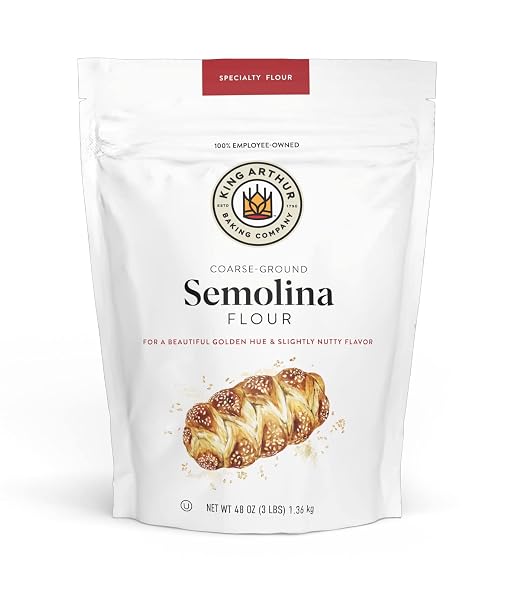
King Arthur Semolina Flour, Coarse Ground, High Protein Duru
✅ PROS
- Premium quality construction and materials
- Spacious size for added convenience
❌ CONS
- May vary based on individual needs and preferences
- Check Amazon for current pricing and availability
The Verdict
Let’s be direct: most “semolina” you find on grocery shelves is actually fine durum flour. King Arthur’s offering is the real thing — coarse ground, high-protein durum wheat that behaves noticeably different in your hands. If you’ve been making pasta with the wrong stuff, this bag will change your kitchen.
What you actually get
A 3-pound resealable bag of golden-yellow granules that look more like fine cornmeal than flour. The texture is immediately obvious when you open it — you can feel the grit between your fingers. That’s not a flaw; it’s the point. King Arthur mills this from hard durum wheat and leaves it coarse, which is exactly what you want for extruding pasta or rolling out fresh sheets.
The protein sits around 12-13%, which is notably higher than all-purpose flour’s 10-11%. That matters because protein equals gluten structure, and gluten structure equals pasta that holds its shape instead of turning to mush.
Real-world performance
I’ve used this three ways: fresh egg pasta, extruded semolina pasta, and pizza dough. The egg pasta was the standout. The coarse grind gives the dough a slightly sandy texture that rolls out cleanly and — critically — doesn’t stick to the rollers the way finer flours do. Extruded shapes like cavatelli held their ridges through boiling. No disintegration, no chalky residue in the water.
For pizza, it works as a blend — maybe 30% semolina to 70% bread flour. On its own, the crust gets too crispy and cracker-like for most tastes. That’s not a knock; it’s just understanding what this flour is for.
One thing worth noting: hydration. Coarse semolina absorbs water differently than fine flour. If you’re following a recipe written for fine semolina, expect to add 5-10% more water and give the dough a 30-minute rest before kneading. This is standard practice, but newcomers to coarse semolina often skip it and end up with dry, cracking dough.
What buyers consistently say
The 4.8-star rating across 240 reviews holds up. The praise clusters around authenticity and consistency. One reviewer noted, “Finally, actual coarse grind — not the powder every other brand sells.” Another called it “the only semolina I use for hand-cut pasta now.” Multiple reviews mention the resealable bag as a practical win, keeping the flour fresh between uses.
The flavor profile gets mentioned too — nutty, slightly sweet, nothing like the bland white flour most of us grew up on.
Where it falls short
The 3-pound size is the main complaint. Heavy pasta makers burn through this fast — a single batch of fresh pasta for four people uses about a pound. If you’re making pasta weekly, you’re reordering monthly. That’s a minor annoyance rather than a dealbreaker, but budget-conscious shoppers should know restaurant suppliers sell 5- and 10-pound bags for less per ounce.
Second, this is a specialty product. If you grab it thinking it’s a 1:1 swap for all-purpose flour in bread or cakes, you’ll be disappointed. The coarse texture doesn’t dissolve into batters, and the high gluten content makes cakes tough. This is a purpose-built flour for pasta, period.
Who should buy this
- Home pasta makers — whether you roll by hand or use a machine, this is the flour you want
- Bread bakers looking to add texture and chew to artisan loaves (use as a blend)
- Anyone who’s tried “semolina” before and got fine powder — this is the real article
Skip it if you’re a casual baker who wants one flour for everything, or if you need bulk quantities for a commercial kitchen.
FAQ
Can I use this for gnocchi? It works, but traditional gnocchi uses regular flour or fine durum. The coarse grind can make the dough harder to shape. Stick with pasta.
Does it need to be refrigerated? No. Store it in the resealable bag in a cool, dry place. It’ll keep for months. If you buy in bulk, freeze portions.
Is this the same as Cream of Wheat? No. Both are wheat products, but Cream of Wheat is a breakfast porridge made from finely ground wheat. This is coarse semolina for pasta — don’t substitute one for the other.
The Verdict
Buy it if: You make fresh pasta at home and want authentic texture and flavor. This is the flour that will finally give you restaurant-quality noodles.
Skip it if: You need a versatile all-purpose flour or you’re baking cakes and pastries.
Rating: 4.6/5 — a specialty product that does exactly what it promises, with real drawbacks only around bag size and narrow use case. For what it is — coarse, high-protein durum semolina — it’s hard to beat.
Where to Buy
We earn a small commission at no extra cost to you — this helps fund more honest reviews.
Last updated: 2026-08-06. Ratings and prices current as of review date. Verify on Amazon before purchasing.
More Coffee Gear Verdicts